
Reclaiming Radical Imagination

Utopia and Speculation in Architectural Practice, Theory, and Pedagogy

Thematic call for VAS - Visionary Architecture Studies Journal, an Open-Access, Peer-Reviewed Journal.
Co-editor: Jana Čulek, PhD, Faculty of Architecture, University of Zagreb

Abstract until 15 of September 2026.
Full paper until the end of November 2026.
Publication of the Issue: February 2027.
Webinar March 2027 (to be announced).

Submissions should be made through the VAS journal publishing platform.
Please indicate the thematic call you are submitting to in the “Comments for the Editor” field.

Architecture today is increasingly shaped by market pressures, process optimization, speed, and various production demands which often overshadow its broader cultural and critical role. At the same time, architecture continues to struggle with the legacy of “failed” modernist utopias – the large-scale social and spatial ideals which are simultaneously being viewed as naïve, authoritarian, overwhelming, and detached from reality. By dismissing these projects as no longer relevant, we seem to have also undermined the impulse which produced them. Consequently, radical imagination in architecture has often become limited either to careful critique and guarded commentary, or to superficial visual production detached from concrete socio-spatial alternatives.

Within the scope of this issue, radical imagination is not understood as an escapist fantasy, but as the critical capacity to envision alternative social and spatial forms which go beyond what is currently possible or inevitable. We take the position that the loss of imagination reflects a broader cultural and societal crisis – a condition in which it is becoming increasingly difficult to imagine futures radically different to our present.

Hoping to reestablish the value of radical imagination, the issue seeks to identify and map the different contemporary roles it still plays within the broader scope of the architectural discipline. Examining cases which work across architectural theory, pedagogy, and practice, we wish to explore how radical imagination operates today, with a particular interest in situated, collective and critical forms of imagination which question inherited social and spatial assumptions.

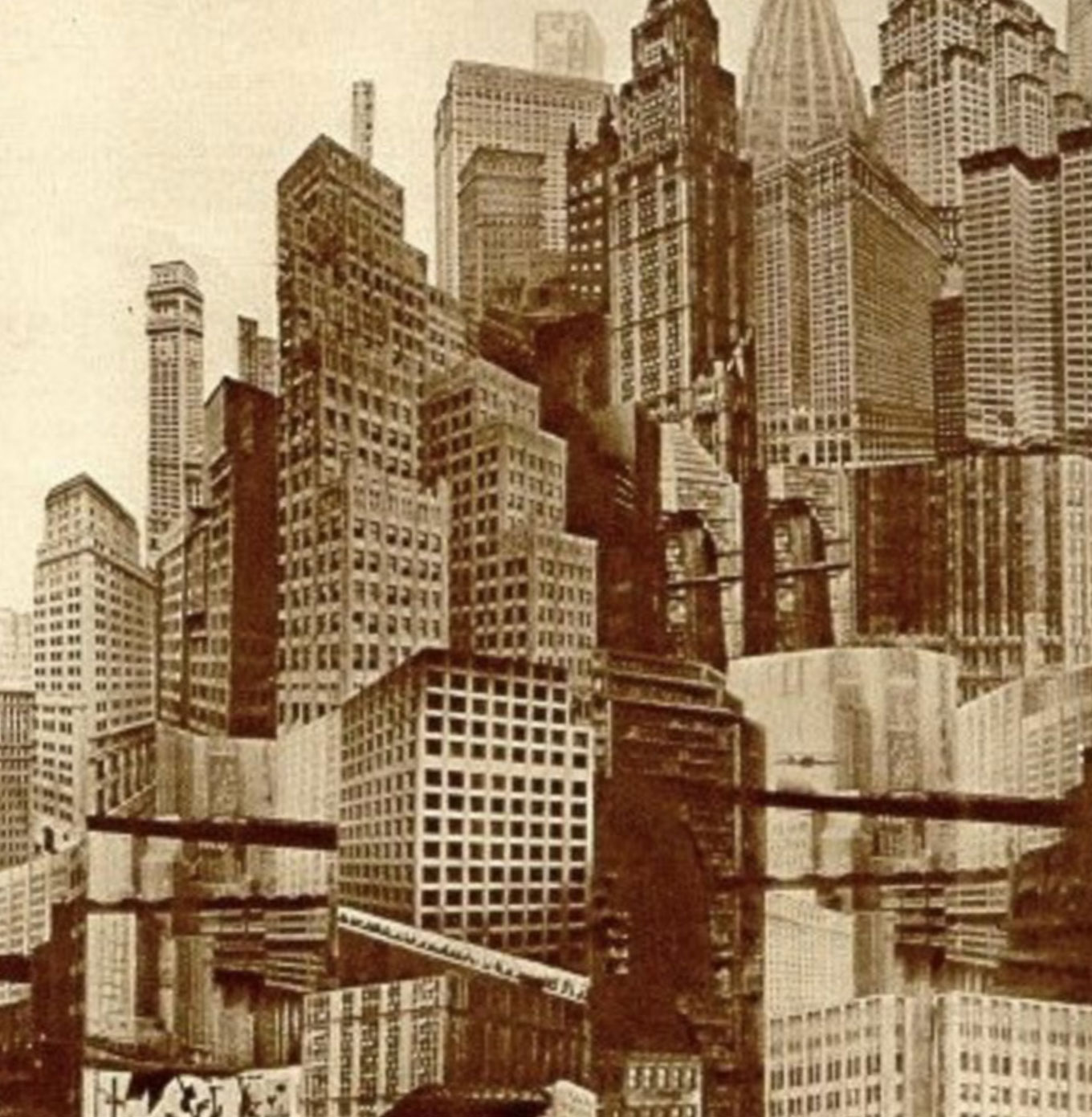
Image - Boris Bilinsky, Public domain, via Wikimedia Commons

Full Call for Papers:

Architecture today is increasingly shaped by market pressures, process optimization, speed, and various production demands which often overshadow its broader cultural and critical role. Rather than exploring alternative social and spatial forms, the discipline is often reduced to reproducing, managing, and supporting existing political, economic and spatial systems. Under these conditions, it is becoming challenging to (re)claim space for critical reflection, speculation, and imagination through which new forms of collective life are possible. If we consider the stakes, we can argue that without nurturing its capacity to imagine alternative futures, architecture risks losing its ability to critically engage with the realities it helps to produce. Consequently, it risks becoming even more complicit in the strengthening and perpetuation of existing systems of power, ideologies, and forms of living.

At the same time, architecture continues to struggle with the legacy of “failed” modernist utopias – the large-scale social and spatial ideals which are simultaneously being viewed as naïve, authoritarian, overwhelming, and detached from reality. By dismissing these projects as no longer relevant, we seem to have also undermined the impulse which produced them. Consequently, radical imagination in architecture has often become limited either to careful critique and guarded commentary, or to superficial visual production detached from concrete socio-spatial alternatives.

Within the scope of this issue, radical imagination is understood not as an escapist fantasy, but as the critical capacity to envision alternative social and spatial forms which go beyond what is currently possible or inevitable. The issue takes the position that the loss of imagination reflects a broader cultural and societal crisis – a global condition in which it is becoming increasingly difficult to imagine futures radically different to our current contexts. Questioning this, we aim to explore recent examples in which radical imagination, speculation, and utopia are still actively used within architectural practice and pedagogy.

This issue therefore seeks to identify and map the different contemporary roles that radical imagination still plays within the broader scope of the architectural discipline. Examining cases which work across the intersections of architectural theory, pedagogy, and practice, we wish to uncover how radical imagination operates today. Looking across design, research, representation, and teaching, we want to observe the ways in which speculative and utopian forms of thinking and creating are still functioning as critical and projective tools.

We are particularly interested in examining situated, collective and critical forms of imagination which question our inherited social and spatial assumptions. The issue welcomes contributions from architects, urbanists and other spatial practitioners, as well as researchers, and educators. Contributions are accepted in the forms of academic articles, critical essays, project-based reflections, and pedagogical experiments. We also accept more visual-based formats such as short-form visual research, speculative mappings and cartographies, design-based research projects and other forms of visual and practice-based inquiry.

Possible topics include, but are not limited to:

1 - Radical Imagination as a Theoretical Question: How can architecture conceptualize alternatives to the present, and what role do utopia, speculation, critical design, and future-oriented thinking play today
- Contemporary utopian thinking and practice
- The crisis of the future in architecture and design
- Worldbuilding practices and the reimagination of social and spatial forms
- Historical and contemporary perspectives on radical and utopian architecture

2 - Radical Imagination as a Method: How is radical imagination mobilized as a critical tool through design, research, representation, and the production of knowledge?
- Representation, fiction, and narrative as critical tools
- Speculative mapping, cartography, and alternative futures methodologies
- Visual research and speculative modes of representation

3 - Radical Imagination as a Practice: Where and under what conditions does radical imagination operate within the wider scope of the architectural discipline today?
- Experimental and speculative pedagogies
- Speculative, critical, and utopian design practices
- Collective, participatory, and activist forms of imagination

Submissions should be made through the VAS journal publishing platform.
Please indicate the thematic call you are submitting to in the “Comments for the Editor” field.